About the Author
Personal Introduction
Dear visitor, welcome to these web pages devoted to the history, origins and heritage of the Tandara surname.
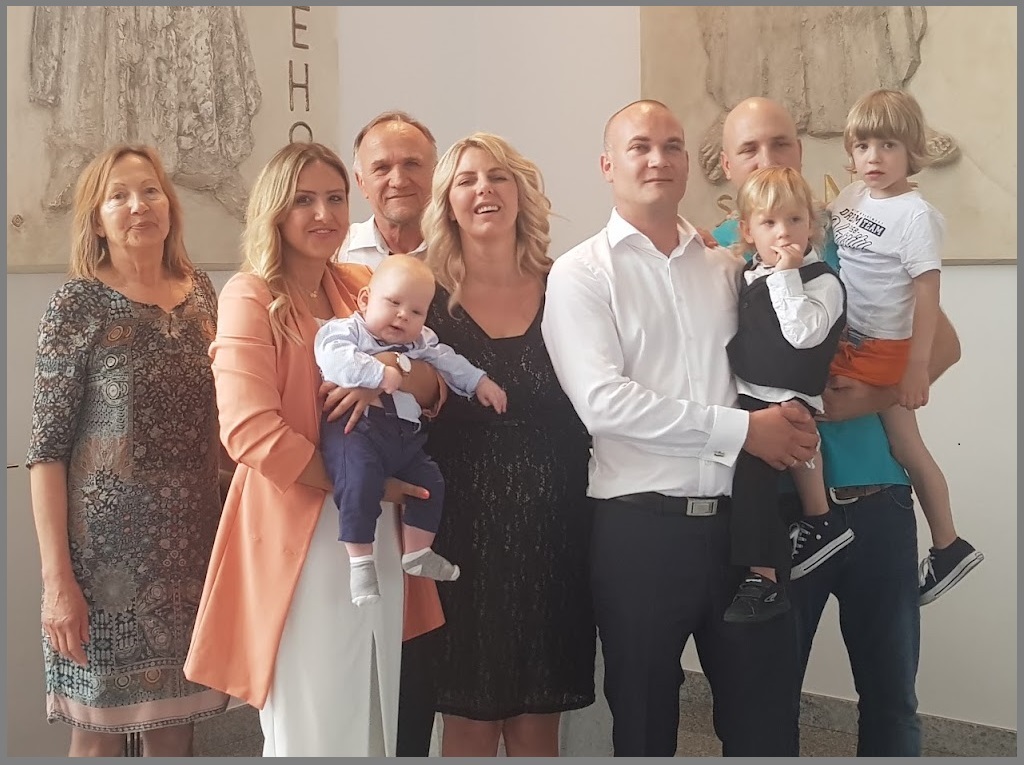
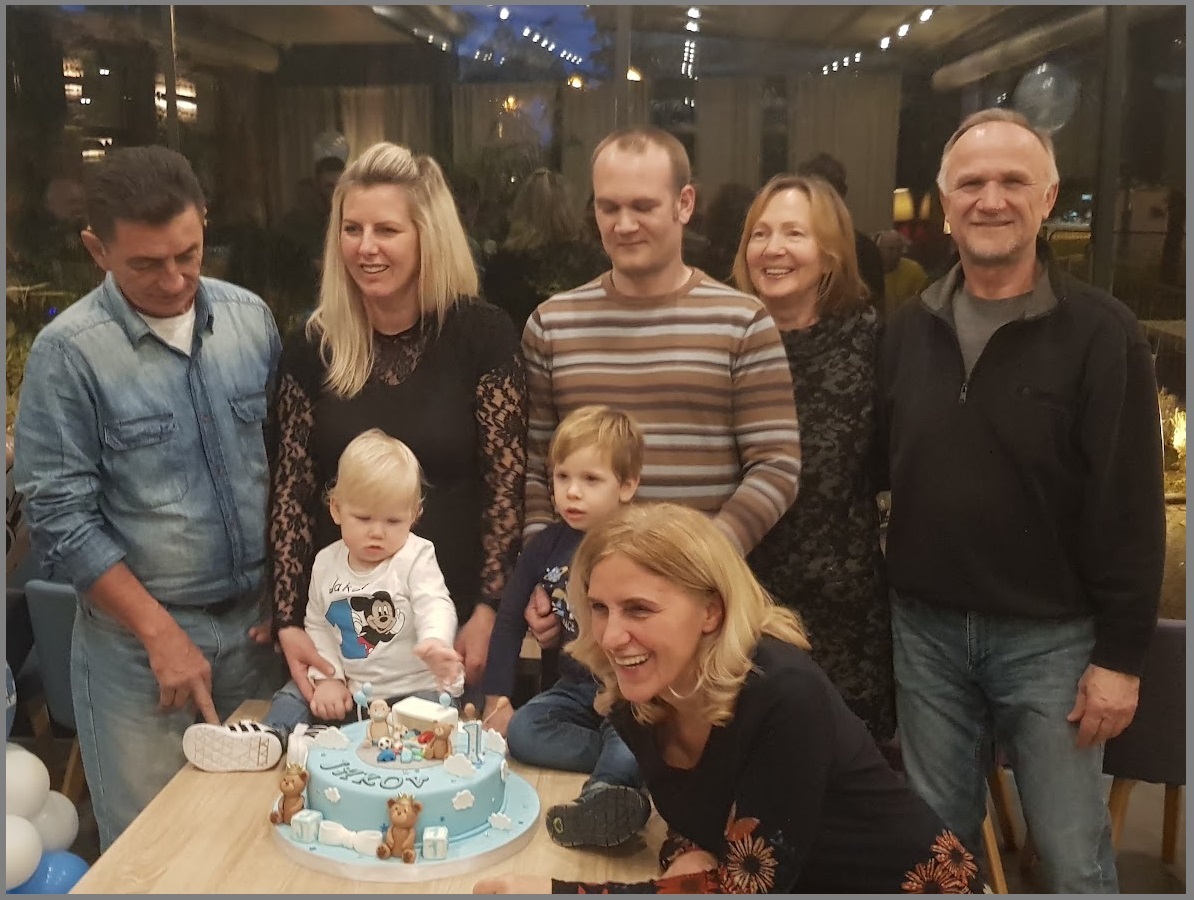
My name is Jure Tandara and I am a road traffic engineer. I am 70 years old and have been retired for six years. I live in Zagreb with my wife, Ruža. I am the father of two sons and grandfather of five grandchildren.
After a long professional career, I now devote my time to my family, researching our roots and to everything that connects me with nature and creative work.
Professional Career
I began my professional career as Head of the Croatian Railways Rolling Stock Repair and Maintenance Facility in Zagreb, where I was responsible for the organisation, supervision and quality of maintenance, as well as the reliability of the rolling stock. This first position gave me a strong technical and organisational foundation for my later work in transport systems.
I later worked as Manager of the Container Terminal in Zagreb , where I was responsible for terminal operations, the organisation of freight flows and the coordination of logistics processes.
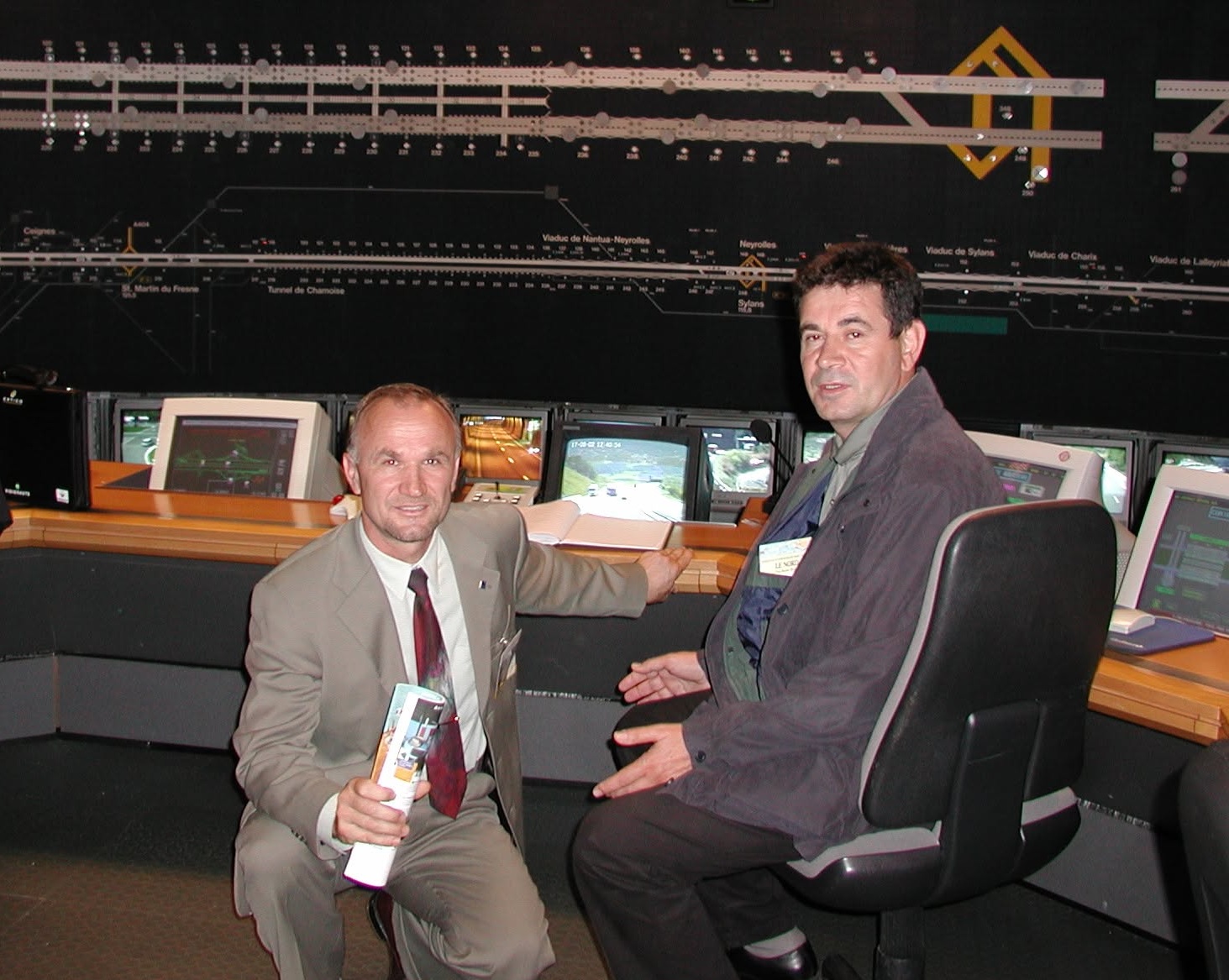
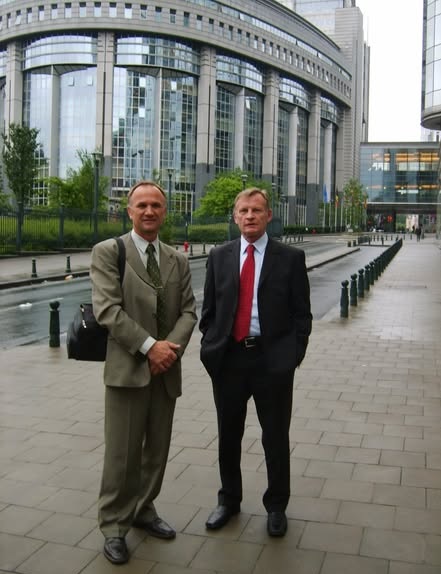
I then took on the position of Head of the Traffic Safety Service on the Rijeka–Zagreb Motorway. Together with my colleague, the head of the maintenance sector, Mr Dinko Pešut, we laid the foundations for a modern motorway maintenance and traffic-safety management system, the first system of its kind in the Republic of Croatia. Our work was also recognised by the European Commission, which in 2009 awarded the Tuhobić Tunnel recognition as the safest tunnel in Europe, as the tunnel that had achieved the greatest improvement in safety following a poor rating in its first assessment in 2004.
An important part of my professional work was also leading the project for the implementation of the RDS-TMC system in the Republic of Croatia. This project laid the foundation for modern traffic information services and for integrating Croatian road information into the European network of dynamic traffic management.
Sport and Technical Craftsmanship
Alongside my professional work, I devoted a large part of my life to sport and technical craftsmanship. I hold a black belt in karate and was formerly a competitor for the Tempo Karate Club, while for many years I was also active in skiing, mountaineering and cycling.
I found particular enjoyment in building models of historical ships, replicas of Roman and ancient war machines, and wooden toys for my grandchildren.
Family and Everyday Life
Today I find the greatest enjoyment in nature and in the time spent with my grandchildren, creating memories with them that reach across generations. My family, children, grandchildren and friends remain my greatest source of inspiration and joy in life.
About the Project
The Digital Archive of the Tandara Family grew from a simple but demanding wish: to collect everything that can still be found, connect scattered family traces and preserve them before time, forgetting and the passing of generations make them inaccessible. Behind the pages, names, dates, photographs and genealogical connections lie many months of research, data verification, correspondence, conversations and attempts to reach people who may be able to add what written sources can no longer tell us.
During this work it became clear that the search for one's own roots does not awaken the same level of interest in everyone. While some people, with a sincere desire to cooperate, shared family information, memories and photographs, other members of the family showed little interest in the project, while some made the provision or publication of information conditional on various requirements. Requests were sent more than once to certain addresses, but no reply ever arrived. The relatively small number of people willing to take an active part was one of the unexpected experiences encountered while creating this archive.
It is one of the paradoxes of our time that there have never been more ways to communicate, yet sometimes reaching another person is more difficult than it was several decades ago. Some members of my generation and older generations do not use social networks and do not regularly use newer forms of digital communication. Others do not accept messages from people they do not know, making initial contact almost impossible. Younger generations, although technologically much easier to reach, are often not yet interested in genealogy and family history. Between these two generational extremes lies a space in which much valuable information may disappear before anyone records it.
For this reason, the project could not simply be a transcription of existing genealogies. Sources had to be compared, confirmations sought, inconsistencies identified, family branches connected and, wherever possible, direct contact made with descendants. Where no answer was received, a gap remained. Such gaps were not filled with assumptions merely to make the genealogy appear complete. It is better to leave a question open than to hand future generations a beautifully presented but inaccurate story.
The entire project has been created on a voluntary basis and has no commercial purpose. It has required months of work, time, personal funds and a great deal of patience. The value of such work is difficult to express simply in hours, because most of the time was not spent on what can now be seen on the screen, but on everything that came before it: searching, checking, comparing, correcting and searching again.
All of this was done with the thought that this archive may not mean the same to everyone today, but that it may become precious to someone tomorrow. Perhaps a future descendant, searching for the name of a grandfather, great-grandfather or ancestral village, will find here the thread that connects them with people who lived long before them. If that happens, the purpose of the work invested in this project will have been fulfilled.
Genealogy is not merely a sequence of names and dates. It reminds us that none of us begins with ourselves. Behind every one of us stand generations of people whose lives, work, decisions, migrations, hardships and families made our own existence possible. Preserving their memory is not merely an interest in the past; it is also a form of respect for the heritage we have received.
This archive should therefore not be regarded as finished work. The genealogy of a living family is never truly complete. New generations are born, new families are formed, places of residence change, new documents appear and old information is corrected. If the project is to retain lasting value, it will need to continue to be supplemented and updated even after its initial completion.
One of the author's greatest wishes is therefore not only that the archive survives, but that in the future there will be people who consider it valuable enough to continue the work. A project such as this outlives its creator only if someone else recognises its purpose, accepts responsibility for preserving it and continues from where the previous generation stopped.
If this archive one day encourages even a few people to ask their parents and grandparents about family stories while they can still hear them, to preserve an old photograph instead of discarding it, or to write down a name that would otherwise have been forgotten, it will already have fulfilled an important part of its purpose.
Our heritage is not only what we have received from our ancestors. It is also what we manage to preserve from it for those who come after us.
Editorial Principles of the Project
Each part of the archive has a clearly defined role. The Origin section deals with the historical context of the surname, Genealogy with family relationships and generations, Migration with the movement of individual branches, and Interesting Facts with the wider linguistic and cultural context of the name Tandara. In this way, the same information is not repeated unnecessarily; instead, each page examines it from a different perspective.
Documented information is given priority throughout the project. Where direct confirmation is lacking, assumptions are identified as possible or probable, while open questions remain clearly separated from confirmed facts. Interactive diagrams provide an overview of family relationships, while the written chapters provide their historical and research context.
The website is primarily intended for use on a laptop or desktop computer because the family trees and graphical displays contain a large number of details. The content remains accessible on smaller screens, but a larger display is more practical for viewing complex diagrams in full.
Public and Private Data
Respect for privacy is an integral part of editing the archive. For that reason, the About the Author page does not repeat age limits, publication criteria or access rules; all such rules are collected in one place, in the Privacy Policy.
Additions, corrections and requests relating to family information are handled through the Contact and Collaboration page so that each change has a clear source and can be checked before it is incorporated into the archive.
Sources and Development of the Archive
The family trees and information published on these pages are the result of many years of work with parish archives, civil registers, historical sources, archival material and testimony from family members. Every new piece of information is compared with the existing structure of the family before it becomes part of the public presentation.
As part of the project's further development, there are plans to produce T-shirts in different sizes bearing the logo from the home page — the family tree with its four main branches and the diagram on the right showing the earliest Tandara families. Because the entire project is financed solely from my pension, the number of T-shirts will be limited. Several will be given as gifts to early or prominent members of our family, to those who will proudly wear the surname on their chest.
If there is interest in producing a wall poster — whether as decoration for a room or as a large wall chart — please contact me through the contact page. I will gladly consider the possibilities and arrange the details with anyone who would like to have such a representation of our family history.
Acknowledgements
This digital archive would not have been possible without the people whose knowledge, dedication and love of family heritage laid its strong foundations.
I owe special thanks to my relative and friend Vice Tandara, whose enthusiasm and vision made him the initiator of the publication Rodoslovlje plemena Tandara. His idea to research, preserve and permanently record the history of our family was the beginning of a project that has left an enduring legacy for future generations.
I extend my sincere and deep gratitude to our mutual friend Milan Lažeta, author of the publication Rodoslovlje plemena Tandara. For years he devoted himself to researching church and state archives, parish registers and numerous other historical sources, patiently collecting and connecting information about the branches and lineages of the large Tandara family. The result of his many years of work was brought together in this exceptionally valuable publication, which represents an invaluable contribution to the preservation of the history and heritage of our family.
The publication Rodoslovlje plemena Tandara is the foundation and principal source of information on which this digital archive has been built. Without the vision of Vice Tandara and the dedicated research work of Milan Lažeta, this project would not have been possible.
To both of them I express my heartfelt gratitude and deep respect for their immeasurable contribution to preserving the shared heritage of the Tandara family.
Jure Tandara