Origin of the Tandara Surname
Introduction
This page examines when the Tandara surname first appears in reliable records, the historical environment in which it developed, and how the recorded form changed in the sources from Tandarić to Tandara. The emphasis is on historical traces and their reliability, while family relationships and individual generations are presented separately in the Genealogy section.
To understand these traces, it is also necessary to consider the area of Ričice and the changes that affected the Imotski region after the end of Ottoman rule and the establishment of Venetian administration in the early 18th century. It was during this period that administrative sources began to appear which allow the surname to be followed with greater certainty.
Etymology and Origin of the Name Ričice
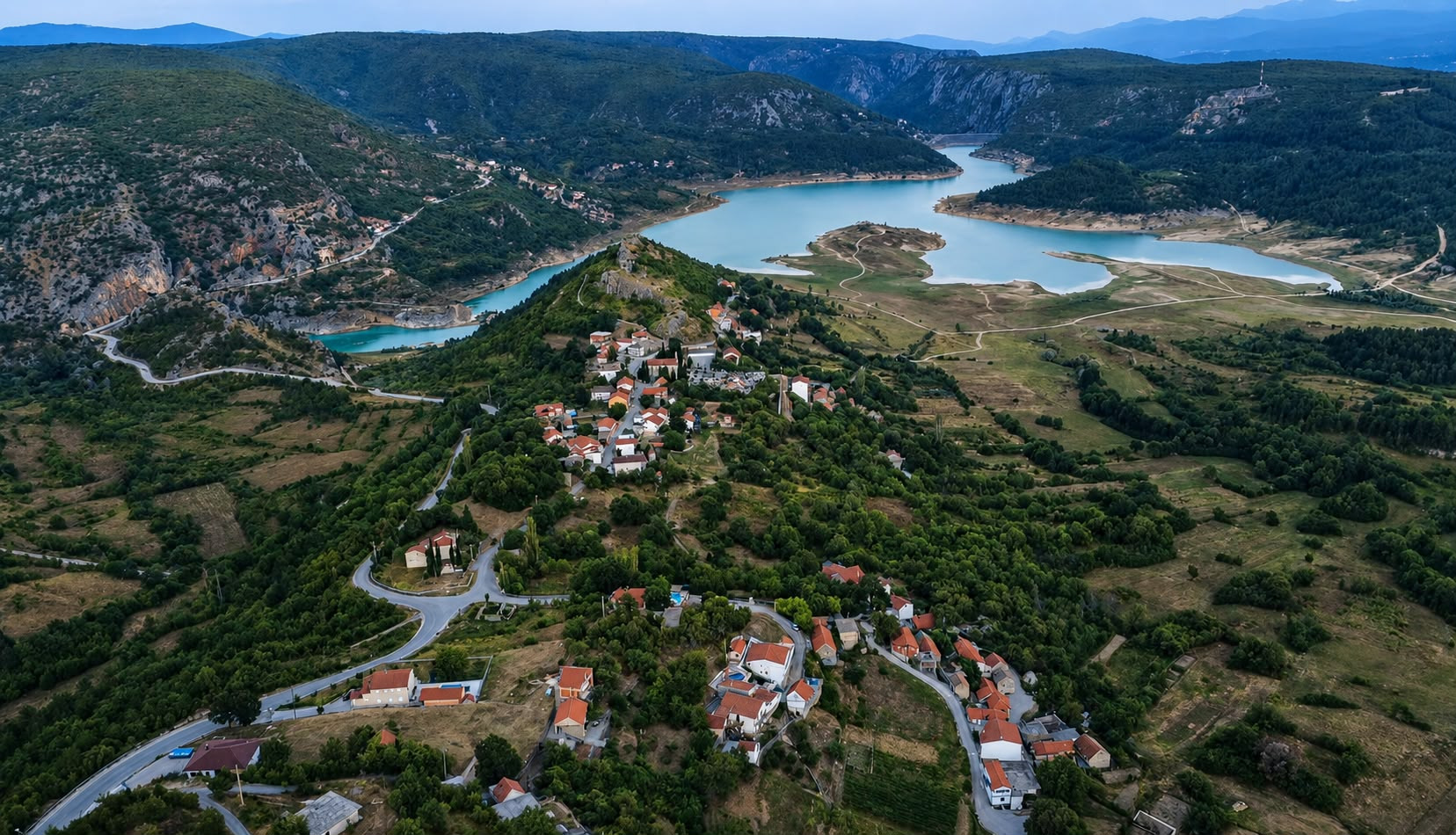
Ričice is not only the place with which the history of the Tandara family is closely connected, but also a settlement whose name preserves traces of the natural features and older history of the area. The most likely interpretation connects the name with water and the numerous smaller streams that flow into the Ričice field, while medieval records confirm that the same or a very similar name existed centuries before the modern form of the place-name.
Water as the Key Clue in the Name
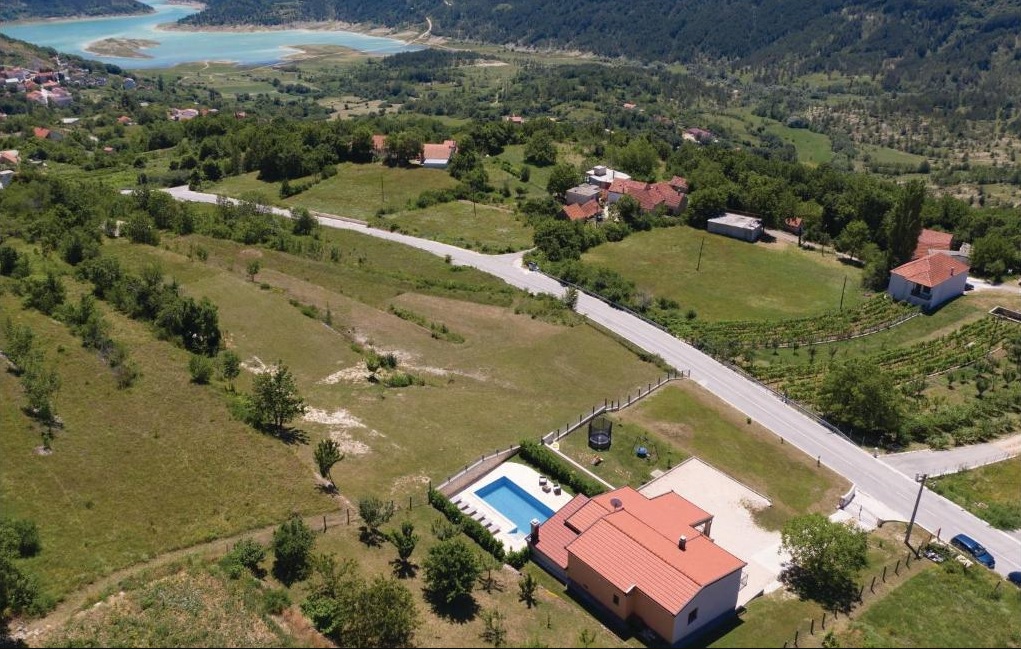
The Ričice field is shaped by numerous small streams, springs and seasonal torrents descending from the surrounding hills. A particularly important feature of this landscape is the Ričina stream, which collects rainwater and spring water and flows through the surrounding villages towards the Ričice field. This natural setting supports the interpretation that the name Ričice is related to the Croatian words rječica, ričica and ričina, terms associated with smaller watercourses.
Local monographic literature, including the book Ričička škrinja uspomena, likewise connects the name of the settlement with the many small streams flowing into the field. Linguistically, such an interpretation is plausible because Croatian place-names often arise from common nouns describing natural features of the landscape. In that sense, Ričice may be understood as a place characterised by “small rivers” or “small waters”.
Medieval Records and Continuity of the Name
The name is also confirmed in older historical material. In a charter of King Alfonso V from 1454, the form Rixeachi appears in the expression civitate Rixeachi, referring to a town or fortress bearing that or a very similar name. Later copies and historical interpretations contain the forms Ričani, Ričine and Ričice.
These records are important because they confirm the long continuity of the name and the stability of the root rič-. However, historical forms alone do not explain the original meaning of the name. It is possible that the present-day settlement inherited the name of the medieval town or its inhabitants, but the question remains whether the older name itself originally arose from the local watercourses.
The Ričina Stream and the Relationship Between Hydronym and Toponym
The connection with the Ričina stream provides further support for a water-related origin of the root rič-. Since names of rivers and streams often predate the names of settlements, it is possible that the place-name developed from the name of the stream. It is equally possible that both the stream name and the settlement name arose from an older local term referring to small watercourses. The available sources do not allow the direction of this development to be determined with certainty, so this possibility should be regarded as complementary to, rather than opposed to, the main interpretation.
How the Interpretations May Be Connected
The three historical clues — the natural term for watercourses, the hydronym Ričina and the medieval name of the town — need not represent competing theories. They may be parts of the same long-term development: a name associated with water may first have referred to an area or stream, later to a town or fortress, and finally to the present-day settlement. Such a sequence is possible and logical, although not every stage is directly documented.
Conclusion
The most likely explanation is that the name Ričice derives from words connected with small watercourses — rječice, ričice or ričine — which have shaped the Ričice field and the lives of its inhabitants for centuries. The medieval form Rixeachi confirms the age and continuity of the name, while the Ričina stream shows that the same linguistic root has remained permanently present in the local landscape. The connection with water therefore remains the most convincing interpretation, while the historical town and the hydronym Ričina help explain how the name may have been transmitted and developed over the centuries.
Note: historical records confirm the existence and development of forms of the name, but they do not provide a direct etymological explanation. For that reason, individual stages of the interpretation are described as probable or possible rather than as fully proven.
The Imotski Region in a Period of Transition
At the beginning of the 18th century, the Imotski region was passing through one of the most important periods in its history. After centuries of Ottoman administration, the area became part of the Republic of Venice in 1717. The new authorities began the systematic organisation of the territory, cadastral surveys of land and the establishment of regular parish registers.
These changes were not merely administrative reforms; they also had a major influence on the formation of family surnames. It was during this period that many families acquired the final hereditary form of their surnames.
Surnames During Ottoman Rule
During Ottoman rule, the population was not recorded in the way familiar to us today. Tax registers mainly recorded:
- heads of households,
- personal names,
- occasional nicknames.
Hereditary surnames were neither compulsory nor an important element of administration. As a result, the same family could appear under different designations in different records, which considerably complicates genealogical research today.
The First Reliable Trace of the Family
The earliest known document that can reliably be connected with the present-day surname dates from 1725. It mentions Ivan Tandarić, who was granted agricultural land in Ričice.
This record is of exceptional importance because it represents the first firm historical evidence of the existence of the family from which the present-day Tandara family would develop.
What Does the Distribution of Land Tell Us?
It is particularly interesting that the plots of land granted to Ivan Tandarić did not form a single continuous holding, but were distributed across several locations within the village.
Such a pattern was characteristic of newly arrived families. Older families already possessed larger, consolidated holdings, while newcomers were granted available plots remaining after earlier distributions of land.
For this reason, many researchers believe that the Tandarić family arrived in Ričice shortly before 1725.
From Tandarić to Tandara
The name Tandarić is a patronymic, meaning a surname formed from the name or designation of an ancestor.
Following the establishment of Venetian administration, a gradual standardisation of surnames began. In cadastral records and parish registers, the shorter form Tandara appears with increasing frequency and, during the second half of the 18th century, becomes the prevailing form.
The first unambiguous record of the standardised surname form dates from 1762, when Tandara appears in parish registers.
A Possible Earlier Connection with Cista
One of the more interesting clues leads to Cista, where the surname Tandar is mentioned as early as 1697. Although there is no document directly proving a genealogical connection between that record and the later family in Ričice, several circumstances suggest a possible link:
- geographical proximity,
- chronological correspondence,
- the exceptional rarity of the surname.
This remains an open research hypothesis deserving further archival investigation.
The Surname as Part of Local History
By the end of the 18th century, the Tandara surname was already firmly established in Ričice.
Later cartographic sources show that the name Tandara also became a designation for part of the village. Such a development was not common and was generally associated with families that had left a significant mark on the development of the local community over several generations.
Conclusion
On the basis of the material currently available, the development of the surname can be followed through several firm points: the record of Ivan Tandarić from 1725, the gradual shortening and standardisation of the surname, and the unambiguous appearance of the form Tandara in parish registers in 1762. These facts form the documented core of the story of the surname's emergence in Ričice.
The earlier mention of the surname Tandar in Cista in 1697 remains an important research clue, but in the absence of a direct document it cannot be regarded as proof of a genealogical connection. For this reason, confirmed records on this page are deliberately separated from possible interpretations so that the distinction between fact and hypothesis remains clear.
Video Recordings from Ričice and Imotski