Migrations and Distribution of the Tandara Family
Introduction
This chapter follows the movement of individual branches of the Tandara family after they formed in their home region. Rather than repeating the history of the surname's origin, the focus is on the directions of resettlement, the periods in which they can be traced, and the places where new family centers emerged.
Ričice remains the starting point of this overview, and every subsequent location is viewed as part of a migration path that needs to be linked to a specific family branch and the available sources.
Ričice – the Origin of the Family
The oldest reliably known center of the family is Ričice in the Imotski region. It is here, during the first half of the 18th century, that the development of the family from which the later branches emerged can be traced.
Over the centuries, Ričice was more than just a place of residence. It represents the point of origin from which individual family members gradually dispersed to surrounding areas, while retaining an awareness of their shared origin.
OpenStreetMap 1: Ričice – Origin of the Surname
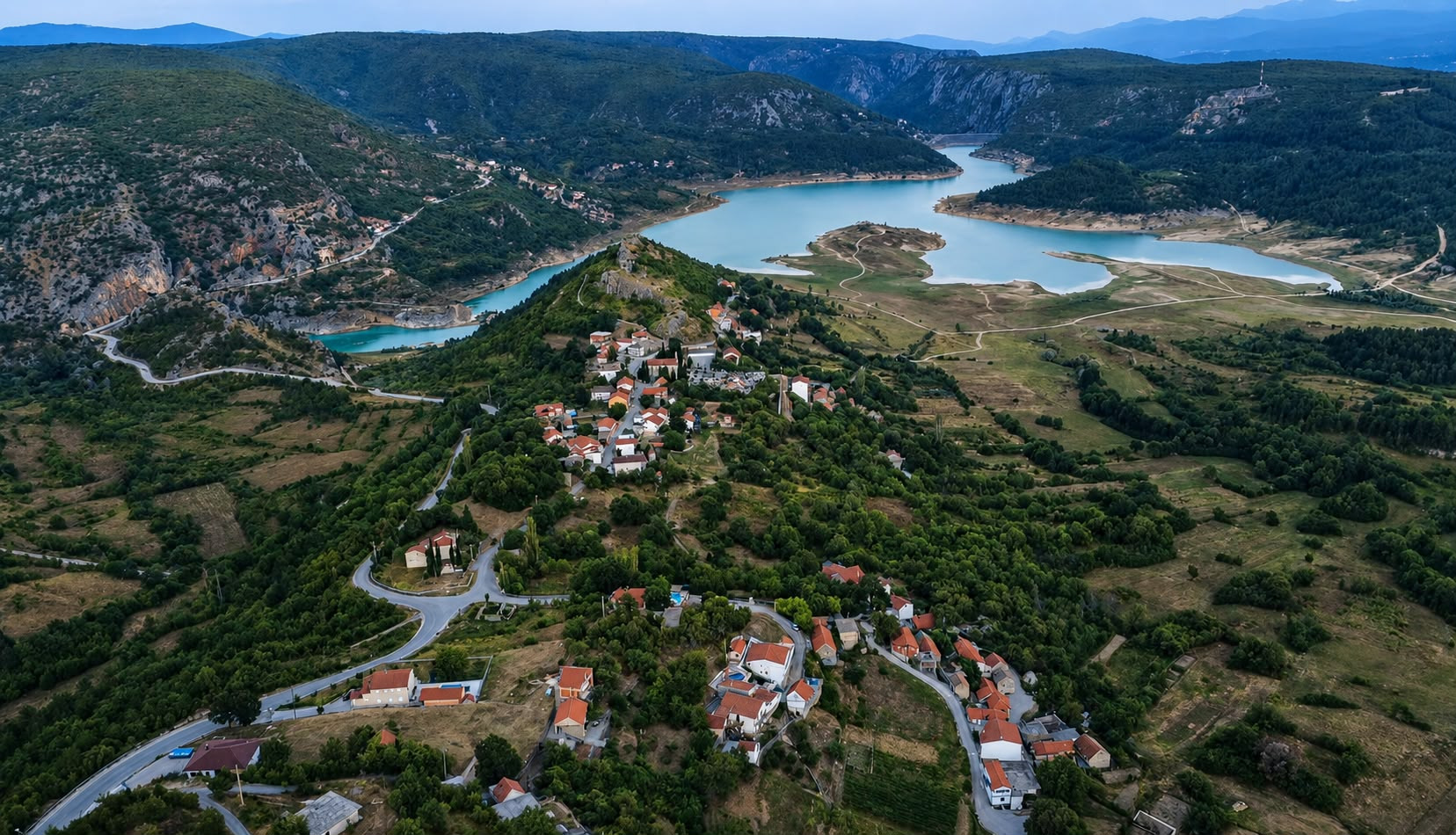
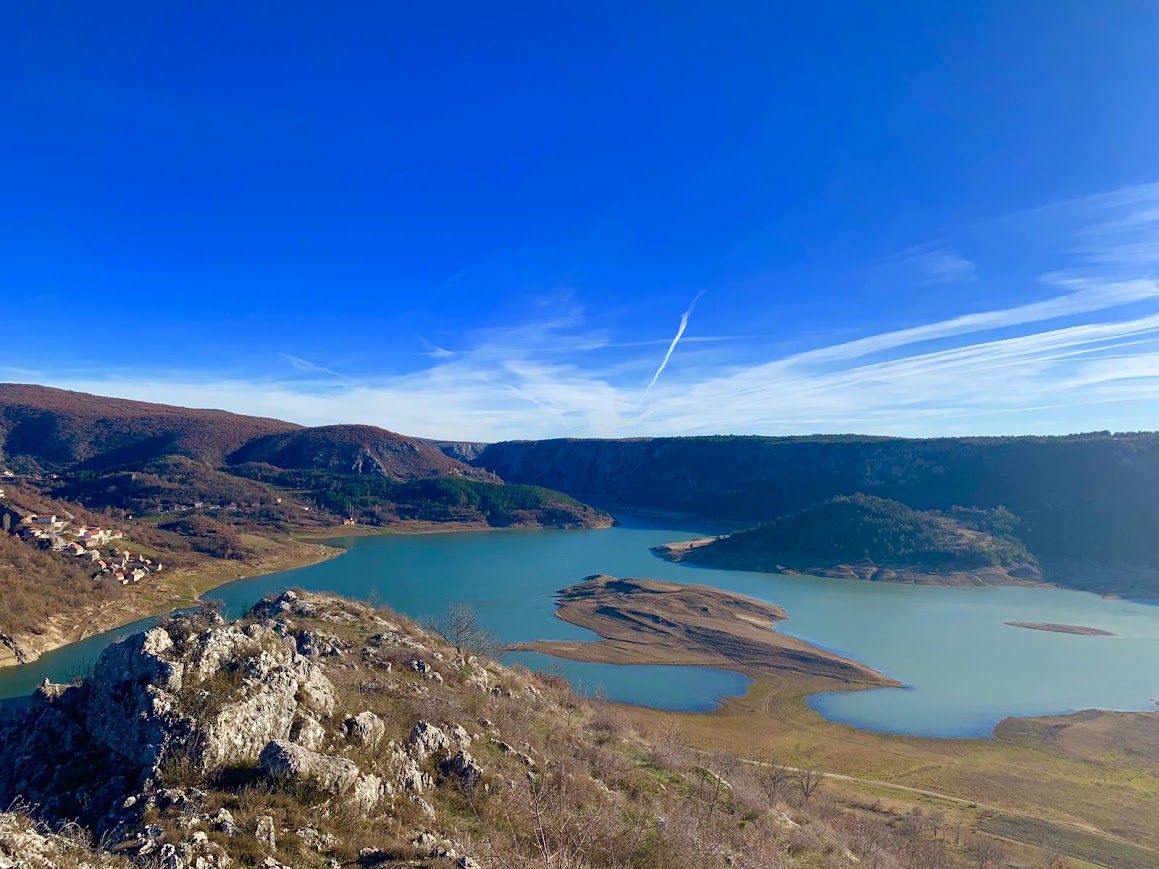
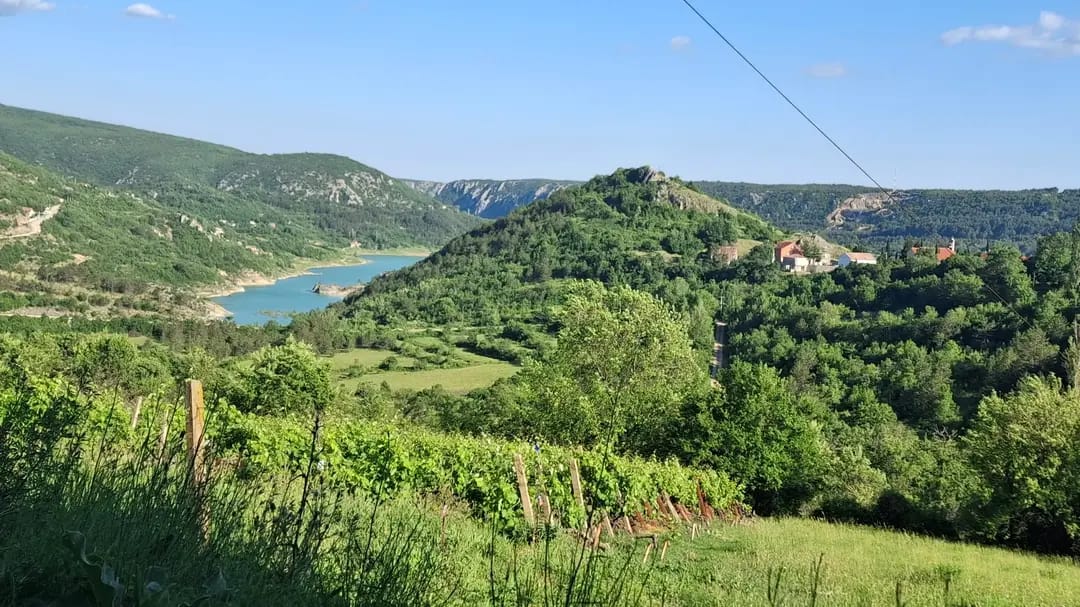
Ričice Through the Seasons and Different Perspectives
Expansion within the Imotski Region
During the 18th and 19th centuries, the number of family members gradually increased. As new households formed, some families moved to nearby places, seeking arable land, the opportunity to establish their own home, or better economic conditions.
Such migrations were common for almost all families in the Imotski region and represented a natural continuation of demographic development.
Expansion toward Zavelim, Tomislavgrad, and Livno
The first reliably documented expansion of the Tandara surname outside Ričice is linked to the Zavelim area, an extensive region comprising about ten villages. Among them is the village of Tandara, named after the first settlers from Ričice – members of the Tandara family.
Between 1806 and 1819, construction of the first houses in this area began, along with the gradual resettlement of two families from Ričice. According to family tradition and research to date, these were the family of Ante Antin, founder of the Lovrina and later the Križan branch, and the family of Martin Petrov, founder of the Tomina branch and the Tromić lineage. Their arrival formed the Zavelim branch of the Tandara family, a direct continuation of the original Ričice lineage.
The Zavelim branch played a key role in preserving the surname, family identity, and lasting connection with the Ričice roots. The settlement of these families created a new core of the family from which additional family lines later developed.
The second expansion of the Tandara family most likely led toward the Tomislavgrad area. From there, individual families moved to Livno, where their descendants still live today. The Tandaras of Livno will be covered in a separate chapter titled The Tandaras of Livno.
Emigration to Europe
The second half of the 20th century brought a new wave of migration. Economic circumstances led numerous families to leave for temporary or permanent work in Western European countries.
Most emigrants settled in:
- Germany
- Austria
- Switzerland
- the United Kingdom
Although they built new homes there, most retained a strong connection to their homeland, regularly visiting Ričice and maintaining family ties.
Overseas Migrations
During the 20th century, individual family members also emigrated to overseas countries. The most common destinations were:
- the United States
- Canada
- Australia
In their new environments, families continued to nurture their Croatian identity, customs, and awareness of their own origin.
Distribution of the Tandara Family Through Time
The story of the Tandaras in Ričice begins very modestly. When the first known Tandara family, recorded as Tandarić, was registered in Netrub in 1725, it consisted of only three members. From that small family nucleus, over the following three centuries, a family developed whose descendants gradually spread from Ričice to other parts of Croatia, neighboring areas, and, eventually, countries around the world.
As early as 1806, three Tandara families with a total of 20 members lived in Ričice, and about fifteen years later, four families with 27 members were recorded in Ričice and Zavelim. The growth in the number of descendants was accompanied by gradual expansion into new places, most often in search of land, work, and better living conditions.
A particularly valuable snapshot is provided by the situation in 1948. At that time, 21 Tandara families with 107 members, spread across nine locations, were recorded in Croatia. Most of them still lived in Ričice — 12 families and 69 people — while other families were already settled in Zagreb, Split, Kutjevo, Podravska Slatina, the area around Bjelovar, Đakovo, and other places.
Table 1: Tandaras in Croatia in 1948
| Place | Number of Families | Number of Members |
|---|---|---|
| Bektež near Kutjevo | 1 | 5 |
| Kutjevo | 1 | 4 |
| Martinec near Čazma | — | 2 |
| Podravska Slatina | 1 | 8 |
| Prgomelj near Bjelovar | 1 | 8 |
| Ričice | 12 | 69 |
| Split | 1 | 1 |
| Strizivojna near Đakovo | 1 | 5 |
| Zagreb | 3 | 5 |
| Total | 21 | 107 |
Sixty years later, the picture had changed significantly. According to data for 2008, 104 Tandara families with a total of 317 members were recorded in Croatia, spread across 32 locations. Zagreb then had 24 families and 73 members, Ričice 8 families and 35 members, and Split 11 families and 35 members. The data show that the once pronounced concentration of the family in its home region during the 20th century had grown into a wide distribution across Croatia.
Table 2: Tandaras in Croatia in 2008
| Place | Number of Families | Number of Members |
|---|---|---|
| Bektež near Kutjevo | 2 | 3 |
| Bjelovar | 5 | 13 |
| Drnje | 1 | 2 |
| Dugo Selo | 1 | 2 |
| Đakovo | 7 | 22 |
| Gornji Karin near Obrovac | 1 | 1 |
| Imotski | 1 | 3 |
| Ivanec | 1 | 3 |
| Kamen near Split | 1 | 3 |
| Kaštel Stari | 2 | 5 |
| Klokočevac | 3 | 11 |
| Kozinščak near Dugo Selo | 1 | 5 |
| Križevci | 1 | 4 |
| Kutjevo | 2 | 7 |
| Nuštar | 1 | 1 |
| Podstrana | 3 | 11 |
| Predavac | 9 | 25 |
| Punat | 1 | 2 |
| Ričice | 8 | 35 |
| Rijeka | 1 | 1 |
| Sesvete | 1 | 3 |
| Sisak | 2 | 5 |
| Slatina | 1 | 1 |
| Slavonski Brod | 1 | 1 |
| Split | 11 | 35 |
| Stinica near Senj | 1 | 2 |
| Stobreč | 5 | 20 |
| Strizivojna | 2 | 5 |
| Vinkovci | 1 | 4 |
| Vrpolje | 1 | 4 |
| Vukovar | 2 | 5 |
| Zagreb | 24 | 73 |
| Total | 104 | 317 |
OpenStreetMap 2: Distribution of Tandara Families in Croatia in 2008
Click on a location marker. The number of families and number of members from the 2008 table are shown in parentheses.
According to data available to the project for 2026, more than 105 Tandara families with more than 330 members live in Croatia alone. At the same time, it is estimated that approximately the same number of Tandaras live outside Croatia today as in Croatia. This estimate covers descendants and family branches dispersed across several countries and should be regarded as a working estimate, since equally complete and comparable official data do not exist for all countries.
OpenStreetMap 3: Current Distribution of the Tandara Family Outside Croatia
The map shows only the locations and countries listed in the genealogical HTML data currently available for the Croatian Tandara family. When a city or village is known, the marker is placed at that location. When only the country is known, the marker is placed approximately at its geographic center.
The numbers next to the markers are not an official population count, but a working figure derived from the genealogical data collected so far. Where the data does not allow a reliable determination of the number of families or members, this is explicitly stated in the marker rather than assuming a number.
The Romanian and Slovak Tandaras are not included on this map, as research to date has not confirmed a common root and genealogical origin with the Croatian Tandara family. Likewise, Australian place names, hotels, and other uses of the name "Tandara" are not part of this map; the Australian marker refers exclusively to Australia as a recorded destination of emigration for members of the Croatian family.
These numbers speak not only of demographic growth. They also show the migration path of a single family across three centuries: from one three-member family in Netrub, through gradual expansion within Croatia, to today's generations living in different countries and on different continents. Each new location on this map represents a new family story, a new branch, and a continuation of a shared root.
From three members of one family in 1725 to several hundred descendants three centuries later — this continuity and distribution best show how much migration has shaped the present-day picture of the Tandara family.
Sources for the historical tables: Leksik prezimena Socijalističke Republike Hrvatske [Lexicon of Surnames of the Socialist Republic of Croatia], Zagreb, 1976 (1948 data); Franjo Maletić and Petar Šimunović, Hrvatski prezimenik: Pučanstvo Republike Hrvatske na početku 21. stoljeća [Croatian Surname Register: The Population of the Republic of Croatia at the Beginning of the 21st Century] (2008 data). The data and estimate for 2026 are based on data currently collected by the project.
How the Migration Trail Is Verified
The mere appearance of the same surname in a new place is not enough to prove membership in a particular branch. For more reliable linking, family ties, generational sequence, places of birth and marriage, family tradition, and other available records are examined.
For this reason, the map and text distinguish between documented directions of resettlement and directions that still represent a research hypothesis.
Present-Day Connections Among Dispersed Branches
Modern communication allows descendants of distant branches to reconnect, exchange photographs and documents, and compare family data. Such contacts can help fill gaps in older archival sources that cannot be resolved using records from only one place.
Conclusion
The migrations of the Tandara family can be viewed as a series of connected paths that begin in Ričice and lead toward neighboring areas, other parts of Croatia, Bosnia and Herzegovina, Western Europe, and overseas countries.
This page therefore does not serve as a second genealogy, but as a geographical layer of family history: it shows where individual branches moved and which connections still need to be confirmed with additional documents.